


Water
This project page was established in January 2022 to bring together people concerned about the water cycle, the health of our rivers and the oceans, and connections with the nature/climate crises.
Main contact: Jocelyn Elson-Riggins
You can contact Jocelyn by email jocelyn_gaynor@yahoo.com
Become a Water Guardian Today!
No one who has seen the Channel 4 series, A Dirty Business, let alone been fully aware of the perilous state of our British waterways over a very long period, can be in any doubt that cleaning up our rivers is a matter of national emergency. Rivers are nature corridors and crucial to the health and biodiversity of the whole landscape; looking after them is a much-needed dimension of the government’s plans for the countrywide Nature Recovery Strategy currently being adopted by local councils. In addition to what Wessex Water claims to be doing in terms of “partnering with national agencies, local authorities and environmental organisations to find nature-based solutions as part of the Water Industry Natural Environment Programme [WINEP]”, there are two independent bodies operating in Dorset with which we can volunteer to monitor the condition of our local rivers ourselves. These bodies provide data to The River Partnership, a citizen science network of organisations which include government agencies, conservationists, water course managers and others.
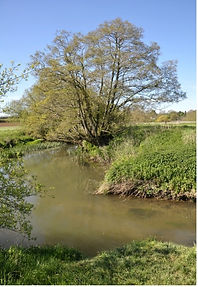
The River Stour meets the River Lodden in Gillingham
Dorset Wildlife Trust (https://www.dorsetwildlifetrust.org) looks after two types of river monitoring: regular reporting throughout the year on the general condition of a particular stretch of river (you will need landowner permission), and River Fly Monitoring which offers the opportunity to train in identifying the presence of invertebrates which are critical in the food chain for all species and not just those which live in the water, notably fish, dragonfly larvae etc, and in turn water birds which feed on these (for example, the Dipper). This is done during the summer months; again, in a particular stretch of water, you will need to get landowner permission and the survey has to be done in pairs for health and safety reasons. The key problems rivers face include invasive plant species, microplastics, run-off pollution from farms, litter and roads and as shown graphically in the television series, storm overflows discharges of untreated sewage. Through Fresh Water Watch, (https://www.freshwaterwatch.org/pages/community-groups ) you can sign up as a volunteer either as an individual or as part of a monitoring community where twice a year (April and September) you can apply for a testing kit from them to report on the level of phosphates, nitrates and the PH of the water. Your report on the results will be added to the organisation’s data base and, once everyone’s reports are submitted, all results will be published and are accessible on their website. Here Is an example of the chemical testing charts used when carrying out the tests; these results were done recently on the River Lodden, Gillingham. Fresh Water Watch sends a helpful instruction sheet along with the testing kit and which is easy to follow:

Nitrate Result

Phosphate Result

PH Result
This is very important work, especially in the absence of or delays in any serious addressing of the severe problems our rivers are facing. It would seem that it is mainly concerned citizens who are the ones who are bringing the required sense the urgency to everyone’s attention.
STOP PRESS: As of 27April 2026, one of the largest chicken producers and a water company are at the High Court accused of polluting the Rivers Wye, Lugg and Usk in a land mark case being brought about by locals being affected by the degradation of these rivers.